Herniated Discs and Spinal Nerve Pressure

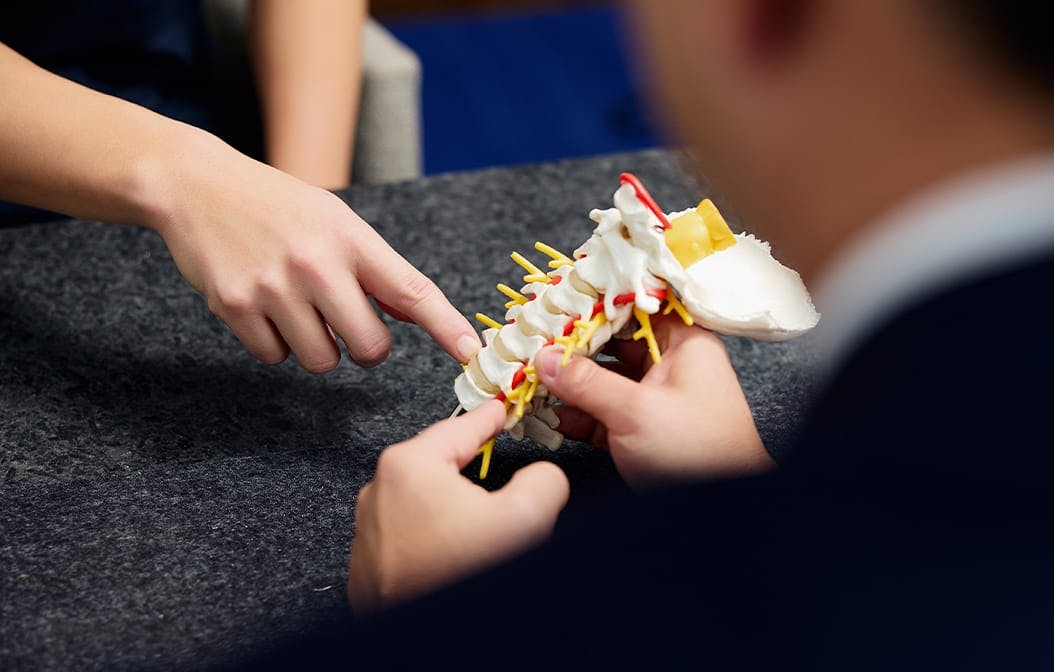
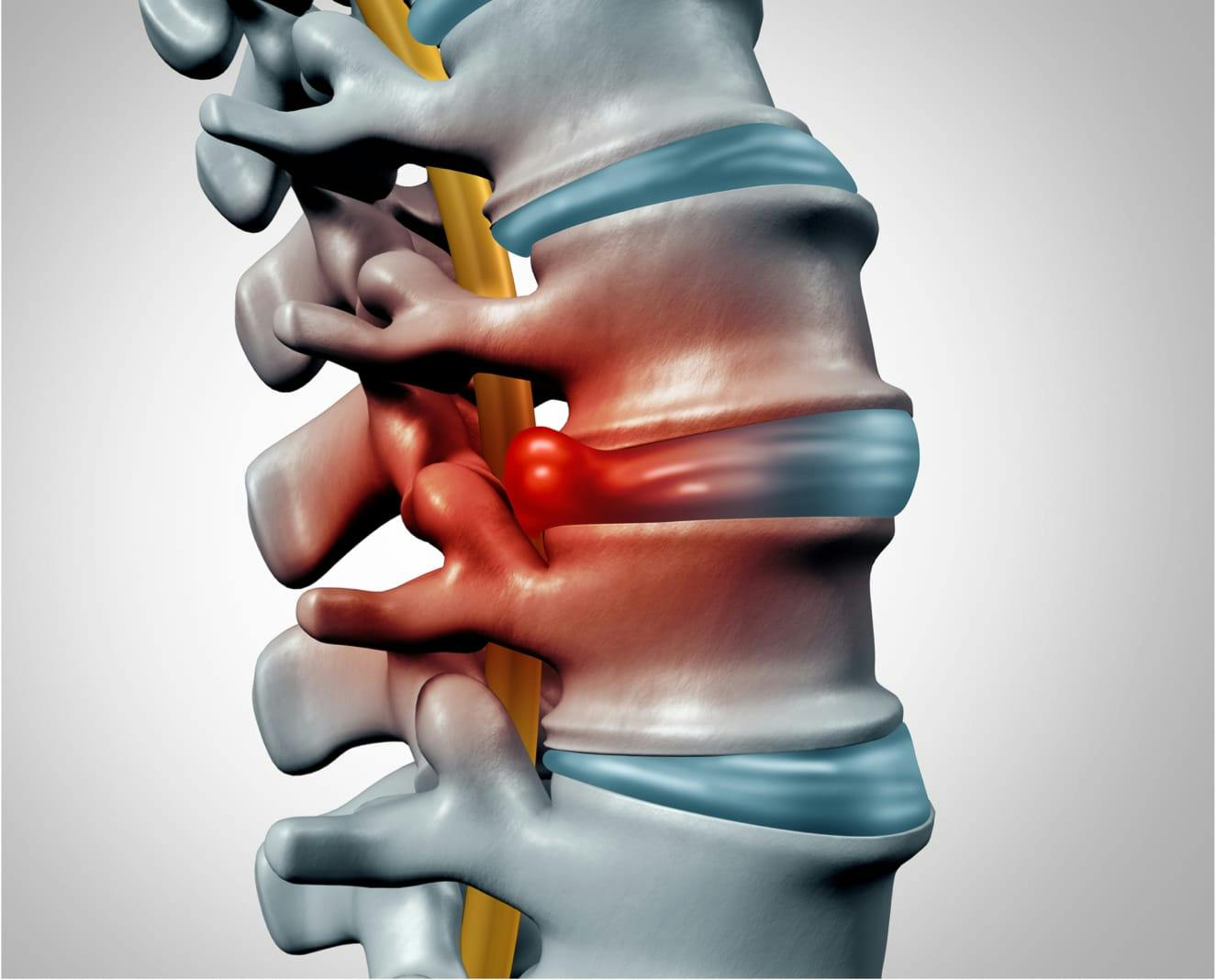
The spine is a column of bones that are separated by spongy intervertebral discs. These discs prevent the bones of the spinal column from grinding against one another by acting as shock absorbers and allow the spine to move. Each disc is made up of annulus fibrosus, which is a strong outer ring of fibers and a soft, gel-like center called the nucleus pulposus.

Herniated discs occur when the strong fibers of the annulus tear or rupture and the gel-like center migrates or pushes out of its normal position and into the limited space of the spinal canal. The displaced disc may exert pressure on the spinal cord or compress nearby spinal nerves. In addition, chemical irritants with the disc material are released that can cause nerve inflammation and pain. Herniated discs are more likely to be found in the neck or lower back but can occur in any area of the spine. Fortunately, Dr. Stieber's NYC herniated disc surgery can treat these symptoms and problems.

Background texture
Herniated Disc

Symptoms

When a herniated disc presses on a nerve, you may experience pain, numbness, and/or weakness of the affected area. In contrast, for those patients without significant nerve compression, mild pain or discomfort may be the only symptom. The location and severity of the herniated disc usually dictate the symptoms.

Symptoms of a herniated disc in the lower back include:

  • Mild to severe lower back pain that is aggravated by movement.
  • Muscle spasm.
  • Sciatica (pain, burning, tingling, or numbness that extends from the buttock into the leg or foot).
  • Leg weakness or loss of leg function.

Symptoms of a cervical (neck) herniated disc may include:

  • Mild to sharp pain in the neck or between the shoulders blades that is aggravated by movement.
  • Pain that radiates down into the arm, hand or fingers. This is called a radiculopathy.

Causes

Herniated disc surgery is most commonly performed on a wide age range of adults and frequently caused by age-related wear and tear or acute spinal injuries. Spinal discs can naturally dry out with age, losing resiliency and strength. This can make them more likely to tear or rupture. Additional factors that can increase the risk for disc herniation include:

  • Excessive force to the spine i.e., falling or collision injuries
  • Incorrect and/or repetitive lifting or twisting
  • Obesity, lack of regular exercise, tobacco use

Diagnosis

If you have back pain and you suspect that a herniated disc is the underlying cause, you will need to contact our New York office and schedule a consultation to confirm the diagnosis and receive a customized treatment plan that can treat your condition.

Contact Dr. Stieber to receive herniated disc surgery in New York, and during your visit, you will undergo a complete physical examination and neurologic examination of the spine.

Dr. Stieber may also order an x-ray, CT scan, MRI, or specialized nerve tests if he suspects that another condition is involved or needs to identify the specific nerves that may be affected to further evaluate the area.

Banner media

Schedule a Consultation

Contact Us
person holding their lower back

Treatment

Most disc herniations do not require herniated disc surgery. The condition often resolves within four to six months. In the meantime, there are many non-surgical treatments that can help relieve symptoms including:

  • Medications, such as anti-inflammatory medications to reduce swelling and pain, muscle relaxants to calm spasms, and narcotics to alleviate acute pain.
  • Epidural corticosteroid injection(s) may help relieve significant radiating pain in the arm or leg.
  • Physical therapy, which may include massage, stretching, therapeutic exercise, bracing, or traction to decrease pain and increase function

For those patients that do not need herniated disc surgery, you will find our outpatient non-surgical microdiscectomy has a multitude of benefits. Click here to learn more.

Herniated Disc Surgery

Dr. Jonathan Stieber is known throughout New York for his effective and personalized approach to resolving back pain. During your consultation, he will formulate a custom treatment plan that is based on your symptoms. Conservative approaches may be all that’s required if your condition is steadily improving. If your condition continues to worsen, Dr. Stieber's herniated disc surgery in NYC may be the best treatment option.

The standard surgical procedure for treatment of a lumbar herniated disc is laminotomy and discectomy. During the procedure, Dr. Stieber will remove a small piece of the bone to gain access to the spinal canal (laminotomy) and then removes a portion of the herniated disc (discectomy). Spinal fusion may be required in certain cases.

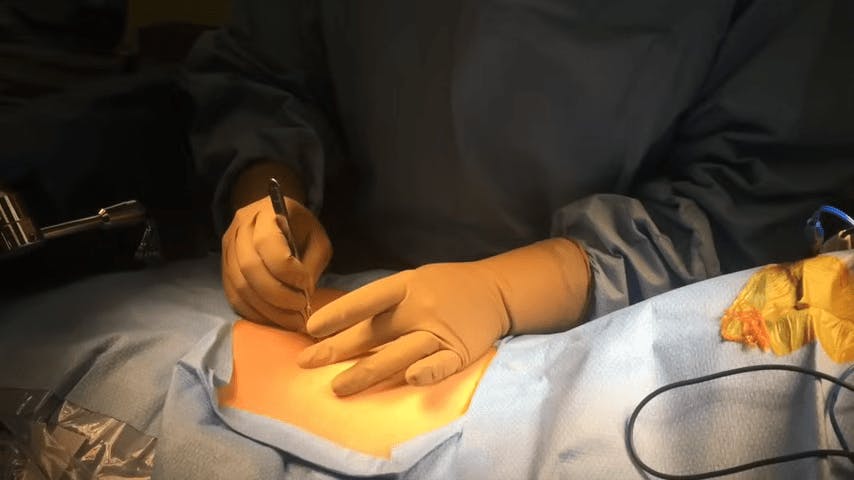
For lumbar disc herniation patients requiring herniated disc surgery, Dr. Stieber offers the most advanced minimally invasive treatment options using extremely small incisions and allowing outpatient treatment. During a tubular microdiscectomy, a robotic microscope will be used to remove the offending herniated disc through an incision of 16-18mm.

Endoscopic discectomy is a procedure that utilizes a specialized camera inserted into the spinal canal through a ¼ inch incision and dedicated instruments to treat damaged discs. Benefits of these minimally-invasive approaches include decreased pain, quicker recovery, and an enhanced cosmetic result.


Video Feature Minimally Invasive Microdiscectomy L5-S1

Minimally Invasive Microdiscectomy L5-S1 video

How to Prevent a Herniated Disc

The following steps can help keep your spine healthy and reduce your chances of experiencing back pain in the future:

Exercise Regularly

Strengthening your back and abdominal muscles can prevent and support the spine.

Practice Good Posture

Reduce pressure on your spine and discs by keeping your back in a healthy alignment. Pay close attention to your posture when sitting down. Lift heavy objects with your legs, not your back.

Maintain a Healthy Weight

Another risk for herniation can be linked to being overweight, which places additional pressure on your spine and discs.

Background media

Herniated Disc Frequently Asked Questions

Are there risks associated with herniated disc surgery?

As with any surgery, even a relatively small outpatient surgery like a discectomy, there are certain theoretical risks involved. Any time we make an incision in the skin, there are risks of bleeding and infection. While these risks are almost zero for a discectomy, they still exist. Any time we operate around nerves, there is a theoretical risk of nerve injury; however, the real-world risk of further nerve injury is extremely small. In our practice, un-pinching nerves and removing the offending disc fragments typically permits the nerve to recover–hopefully fully; however, the rate and extent of recovery depend on the patient’s own biology and healing. Therefore, there is always some degree of risk for persistent nerve dysfunction even with an optimally performed surgery. Any time surgery is performed around the nerve sac, there is also a theoretical risk of injury to the nerve sac, including a tear or puncture. This happens extremely rarely in our practice. If such an injury were to occur, it might need to be repaired with surgical glue or a very fine suture under the microscope. While it is extremely uncommon, both our experience and the literature demonstrate that there is very seldom any long-term adverse effect from this type of event. With or without surgery, a disc that has herniated or ruptured carries a risk of progression or recurrent disc herniation, as well as degeneration that may result in future back pain or other neurologic symptoms related to disc collapse. Even with an optimally performed surgical microdiscectomy, there is always a risk of recurrent or persistent nerve discomfort or back pain, and some patients may require further future treatment, including additional surgery.

Can a herniated disc heal without surgery?

Many herniated discs improve over time with non-surgical treatments such as rest, anti-inflammatory medications, physical therapy, and steroid injections. Surgery is usually reserved for severe or persistent cases–or cases associated with a serious or progressively worsening neurologic deficit (e.g. numbness and/or weakness).

Which minimally invasive surgical options are available for herniated discs?

Options include minimally invasive microdiscectomy and endoscopic discectomy, which remove the offending herniated disc material with minimal disruption to surrounding tissues.

How does a surgeon decide between microdiscectomy, laminectomy, and fusion for a herniated disc?

The choice depends on the location and severity of the herniation, degree of nerve compression, spinal stability, patient anatomy, and whether previous surgeries have been performed.

What is the expected functional recovery timeline after a lumbar microdiscectomy?

Nearly all discectomy patients are treated as outpatients and go home the same day. Most patients can walk immediately after surgery and resume light activities within a few days. Patients with desk-type jobs can usually return to the office within a week. Full recovery with optimal strength and flexibility may take 3-6 months.

Can herniated disc surgery be performed on multiple levels at once?

Yes, multi-level discectomies or fusions are possible but may require longer operative time, more recovery, and careful preoperative planning. In many cases, multilevel discectomies can be performed through the same small incision by repositioning minimally invasive tube retractors or endoscopic instruments.

What are the potential long-term outcomes and recurrence rates after herniated disc surgery?

Most patients experience significant pain relief and improved function. Most studies put the rate of recurrent lumbar disc herniation after a standard microdiscectomy at roughly 5–15% over time, depending on how “recurrence” is defined and how long patients are followed. After a standard lumbar microdiscectomy, about 1 in 10 patients may eventually need another operation at the same level, and roughly 1–2 in 10 might need some additional lumbar surgery over the next decade or longer.

Schedule a Consultation And Get The Pain-Free Lifestyle You Deserve

NYC spine surgery specialist, Dr. Jonathan Stieber, provides his patients with the most effective treatment options available, all of which are tailored to meet your individual needs. With Dr. Stieber guiding your care, it is possible to say goodbye to pain and enjoy an active lifestyle once again.

Contact Us
Contact Us Page
Accessibility: If you are vision-impaired or have some other impairment covered by the Americans with Disabilities Act or a similar law, and you wish to discuss potential accommodations related to using this website, please contact our Accessibility Manager at (646) 916-3962.
Contact Us